


A ball rolls across the floor, and your toddler reaches for it, a beat late. Or the tower of blocks tips again, and those big eyes plead for help. I have been there, sitting on the rug, cheering for one more try. Hand-eye coordination in toddlers sounds technical, but it is simple at heart. It is the way eyes and hands work together smoothly, helping kids eat, play, and learn with less struggle.
This skill shows up everywhere. Scooping yogurt, turning pages, stacking cups, catching a balloon, all of it asks the eyes and hands to sync up. When it improves, your child feels more sure of themselves. Play gets easier. Learning feels less heavy. Confidence grows, one small win at a time.
In this guide, we will cover what the skill means, the signs to watch, fun ways to build it, and how to track progress without stress. You will find simple activities, gentle tips, and a warm push to try one new idea this week.
Want to help your toddler develop better hand-eye coordination? Here’s how:
- Why it matters: Hand-eye coordination helps toddlers with physical tasks (like feeding themselves), social skills (like playing with others), and school readiness (like writing and cutting).
- Key milestones:
- 12–18 months: Grasping, scribbling, basic ball throwing.
- 18–24 months: Stacking blocks, turning pages, drawing lines.
- 24–36 months: Catching balls, drawing shapes, using utensils.
- Activities to try:
- Ball games: Rolling, tossing, and catching.
- Building: Stacking blocks or cups.
- Drawing and crafts: Scribbling, finger painting, and sticker play.
- Daily tasks: Pouring water, using utensils, and simple kitchen chores.
Tip: Track progress every few months and adjust activities to match your child’s skill level. Use simple tools like blocks, crayons, or even household items to make learning fun.
Start small, keep it playful, and watch your toddler’s coordination grow!
Easy activities to improve hand eye coordination in 12-18 month olds ?
How Toddlers Develop Hand-Eye Coordination
Between the ages of 1 and 3, toddlers experience significant growth in hand-eye coordination. This skill develops as their brain and body mature, allowing them to better align what they see with precise hand movements. Daily activities and natural development play a big role in improving these abilities. Here’s a closer look at what to expect during this stage.
Key Milestones by Age (12-36 Months)
Toddlers typically achieve certain coordination milestones during this period:
| Age (months) | Key Coordination Skills |
|---|---|
| 12-18 | • Mastery of the pincer grasp • Basic ball throwing • Stacking 2-4 blocks • Beginning to scribble |
| 18-24 | • Building towers with 4-6 blocks • Turning single pages • Drawing vertical lines • Improved ball-throwing accuracy |
| 24-36 | • Constructing towers with 6-8 blocks • Drawing circles • Catching large balls • Consistent use of utensils |
Research shows that toddlers who engage in structured play daily improve their block-stacking accuracy by 23% compared to those with fewer practice opportunities.
Brain and Body Growth
Between ages 1 and 3, brain development plays a crucial role in improving coordination. Around age 2, the corpus callosum – the part of the brain connecting the two hemispheres – strengthens, enabling toddlers to perform tasks that require both hands, like holding paper while drawing.
Physical growth also contributes to coordination improvements:
- Core Stability: By 18 months, stronger core muscles help toddlers control their movements for activities like reaching and grabbing.
- Visual Development: Depth perception sharpens around 30 months, allowing toddlers to better judge distances.
- Neural Growth: Sensory play leads to 2.3 times more neural connections compared to passive observation.
The environment significantly impacts these developments. For example, using appropriately sized tools, like 1-inch crayons, helps toddlers refine their grip about six weeks faster. Activities like drawing on vertical surfaces (e.g., easels) improve wrist extension 30% faster than tabletop tasks.
It’s also common for about 30% of toddlers to experience temporary regressions during growth spurts. Parents can support their child by offering consistent practice opportunities while understanding that these setbacks are a normal part of development.
Games and Activities That Build Coordination
Toddlers can sharpen their coordination through fun and engaging activities. With regular practice, these games can help improve hand-eye coordination and motor skills. Below are some practical ideas to try.
Playing with Balls
Large, soft balls (6–8 inches) are great for small hands to grip. Start with simple rolling games and gradually move to tossing and catching as your toddler gets better.
Here are some ball activities to try:
- Rolling practice: Sit about 3 feet apart and roll a ball back and forth.
- Target practice: Set up empty plastic bottles as bowling pins and knock them over.
- Balloon play: Use a balloon for a slower, easier catching experience.
- Ball and bucket: Drop tennis-sized balls into a bucket (around 12 inches wide) from different heights.
Make sure the balls are soft and large enough to avoid choking hazards or injuries.
Stacking and Building
Stacking helps toddlers develop spatial awareness and refine their hand movements. Start with larger blocks (2–3 inches) and gradually introduce smaller ones as they improve.
Try these building activities:
- Cup stacking: Use plastic cups to build towers.
- Block patterns: Encourage your toddler to copy simple designs with blocks.
- Nesting toys: Practice fitting objects of various sizes together.
- Shape sorting: Match blocks to the corresponding holes in a shape sorter.
Drawing and Crafts
Drawing helps toddlers develop fine motor skills and express their creativity. Begin with thick crayons for easy handling and progress to standard art supplies as they gain control.
Here are some ideas for drawing and crafts:
- Vertical drawing: Tape paper to a wall at your toddler’s eye level for a new drawing experience.
- Connect the dots: Create simple designs using large dots spaced a few inches apart.
- Finger painting: Use washable paint for a hands-on, exploratory activity.
- Sticker play: Let your toddler peel and place large stickers onto paper.
Keep these sessions short and fun, and always supervise to ensure your toddler stays safe.
Practice During Daily Tasks
Daily routines offer great opportunities to develop hand-eye coordination – small changes in how tasks are done can help strengthen these skills.
Building Skills During Mealtimes
Mealtimes are perfect for practicing controlled movements. Start with finger foods and gradually introduce child-friendly utensils.
- Choose toddler-sized utensils: Smaller forks and spoons are easier for little hands to manage.
- Use dishes and cups designed for toddlers: These are typically easier to grip and handle.
- Offer bite-sized food: Pieces that are easy to pick up encourage precision.
- Provide sturdy cups: Cups with a solid base reduce spills and help with control.
You can also encourage your child to pour water from a small pitcher into a cup. Simple kitchen tasks like stirring batter or washing vegetables are excellent ways to further improve coordination. Making small adjustments like these throughout your daily routines helps reinforce these important skills.
sbb-itb-af3629d
Checking Progress and Making Changes
Keep an eye on your toddler’s coordination to match activities to their current skill level. Here’s how to monitor their development and tweak activities to keep them engaged.
Tracking Skills Over Time
Every 3–6 months, jot down your toddler’s progress in key areas like precision grip, hand control, and visual tracking. This doesn’t have to be formal – just a simple record to help you spot patterns and areas that might need extra attention. Focus on these skills:
- Precision grip: How well they can pick up and handle small objects.
- Tool use: Their ability to use utensils, crayons, or other tools.
- Hand control: Accuracy when reaching for or grasping objects.
- Visual tracking: How smoothly they follow moving objects with their eyes.
Mark down new milestones with dates. This way, you can celebrate achievements and pinpoint where they might need more practice.
Changing Activity Difficulty
Adapting activities to your child’s abilities keeps them motivated and helps them progress steadily.
If They Need Simpler Tasks:
- Use larger objects that are easier to grip.
- Slow down games involving movement.
- Shorten the distance they need to reach.
- Provide stable surfaces for tasks like stacking.
If They’re Ready for More Challenge:
- Introduce smaller objects for fine motor practice.
- Speed up games that involve tracking movement.
- Add more complex patterns to sorting activities.
- Create tasks that require multiple steps.
Pay attention to their reactions. If they seem bored, it’s time to step up the difficulty. If they’re frustrated, scale it back. Keep adjusting as needed, and get ready to explore more tools for building coordination in the next section.
Tools for Building Coordination
Using the right tools alongside everyday activities can help your toddler improve coordination skills more effectively. Choosing the right materials plays a big role in this process.
Fionadarocha‘s Learning Tools
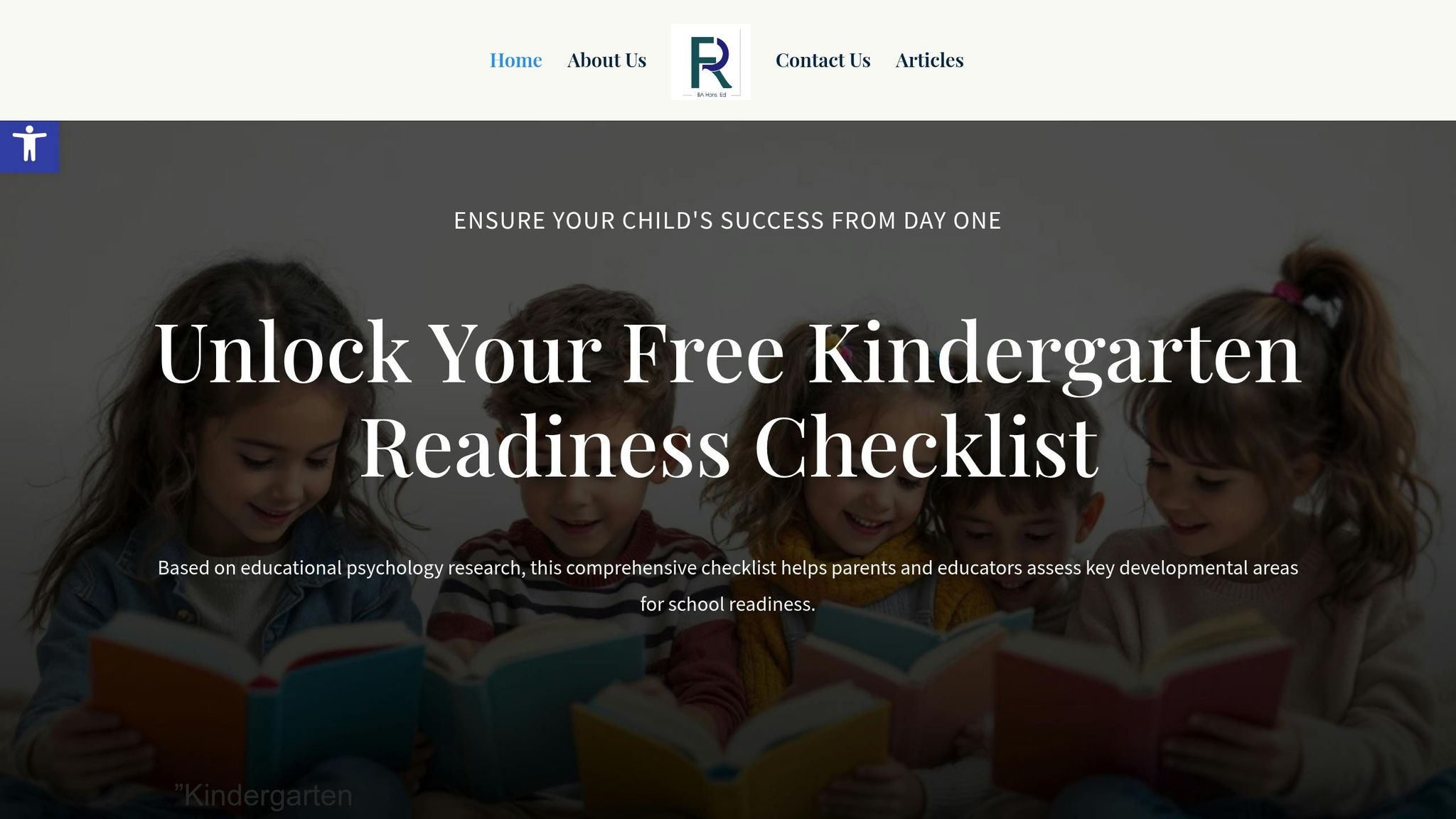
Fionadarocha offers tools designed to support hand-eye coordination. One standout resource is the Kindergarten Readiness Checklist, which helps parents track their toddler’s progress in motor skills. Although originally aimed at children aged 4–6, it’s equally helpful for parents of 3–4-year-olds by allowing them to:
- Track fine motor development
- Pinpoint areas needing extra attention
- Get activity ideas tailored to their child’s skill level
The checklist organizes developmental milestones into simple, observable actions, making it easier to identify where your child might need extra help and which activities could address those areas.
"The checklist assesses key developmental areas, including language and motor skills, which are related to hand-eye coordination", says Fiona Da Rocha, an early childhood education expert.
While specialized tools like these are helpful, many everyday items around your home can also build coordination.
Using Items from Home
Household items can be surprisingly effective for improving coordination. Here are some practical ideas:
Kitchen Items:
- Plastic measuring cups for scooping and pouring
- Large wooden spoons for stirring practice
- Empty paper towel rolls for rolling ball games
Clothing and Fabrics:
- Oversized buttons for threading
- Old socks turned into bean bags
- Ribbons for tracking and movement exercises
Recyclables:
- Empty boxes for stacking
- Plastic containers with lids for twisting
- Paper tubes for rolling balls
When choosing items, focus on those that are safe, appropriately sized, durable, and easy to clean. Everyday objects can be just as effective as specialized tools when used creatively.
Conclusion: Next Steps for Success
Toddlers improve hand-eye coordination through a mix of everyday activities, focused exercises, and regular check-ins to track progress.
Start with Fionadarocha’s Kindergarten Readiness Checklist to assess your toddler’s current skills and pinpoint areas that may need extra attention. Here’s how to keep the momentum going:
- Regular Check-Ins: Evaluate your child’s coordination every 4–6 weeks to track growth.
- Adapt Activities: Adjust games and exercises based on your child’s progress.
- Stay Connected: Work closely with teachers to align efforts at home and in the classroom.
Each child grows at their own pace, so use these tools as a guide while keeping activities playful and natural. Fionadarocha provides interactive learning options that fit seamlessly into daily routines, making learning enjoyable for both you and your toddler.
Focus on keeping activities short, fun, and appropriate for your child’s age. This helps maintain their interest and builds confidence as they develop new skills.
Coordination is just one piece of the school-readiness puzzle. For the full, gentle picture, you are welcome to my free Confident Beginnings Starter Kit.
FAQs
How can I know if my toddler’s hand-eye coordination is developing properly?
Hand-eye coordination develops at different rates for every child, but there are general milestones you can look for. By around 12 months, many toddlers can pick up small objects using their thumb and forefinger, stack a couple of blocks, or point to items. By 2 to 3 years old, they may begin throwing balls, turning pages in a book, or using utensils with growing accuracy.
If you’re concerned about your child’s development, observe their ability to perform age-appropriate tasks during play or daily routines. Remember, practice and encouragement are key! Activities like building with blocks, drawing, or catching soft balls can help strengthen these skills over time. If you have significant concerns, consider consulting a pediatrician or early childhood specialist for guidance.
What are the signs that my toddler may have difficulty with hand-eye coordination, and how can I help them improve?
If your toddler struggles with activities that require precise hand movements, such as stacking blocks, catching a ball, or using utensils, they may need support developing hand-eye coordination. Other signs can include difficulty with puzzles, drawing, or reaching for objects accurately.
To help your toddler improve, focus on fun, hands-on activities like stacking cups, rolling or tossing a ball, threading large beads, or playing with building blocks. Incorporate these activities into their daily routine to make learning natural and enjoyable. Encouraging outdoor play, such as catching bubbles or drawing with sidewalk chalk, can also boost their coordination skills in a relaxed setting.
For more tips and tools, Fionadarocha offers resources designed to support your child’s early development, including interactive learning activities and pre-designed teaching materials to make learning engaging and effective.
What are some effective tools or activities to help my toddler improve hand-eye coordination at home?
Supporting your toddler’s hand-eye coordination development can be fun and engaging with the right tools and activities. Everyday items like building blocks, puzzles, and balls are excellent for encouraging coordination through play. Incorporating activities such as stacking cups, threading beads, or catching a ball can also be highly effective.
For additional guidance, Fionadarocha offers a variety of resources tailored for parents and educators. These include pre-designed teaching materials, interactive learning activities, and a free school readiness checklist to help you support your child’s holistic development.
Related posts
- 15 Fun Activities to Develop Fine Motor Skills in Preschoolers
- 8 Signs Your Child is Ready for Kindergarten
- How Play Shapes Cognitive Skills in Early Years

Meet Fiona da Rocha, a trailblazer in education with over two decades of expertise. At the heart of her mission to transform early education, Fiona empowers parents and teachers to ignite a passion for learning in children aged 3-9. Her approach? Joyful, child-led experiences that build confidence and foster talent exploration. Discover how she’s making learning a thrilling adventure at FionaDaRocha.com-where education meets empowerment and enthusiasm.