


Two preschoolers lock eyes over a red truck, both hands reaching, voices rising. You know the scene. It happens fast, and it can feel bigger than the room it’s in. In those tense moments, our response shapes more than the next minute. It shapes how children learn to listen, speak up, and repair trust.
Preschool conflict resolution is not about winning or losing. It is about teaching skills that last, like naming feelings, taking turns with words, and finding fair solutions. These early lessons grow empathy, patience, and independence.
Here’s a simple roadmap you can use right away: calm the moment, name the problem, listen with care, brainstorm fair ideas, and agree on a plan. These steps are small, but the change they bring is real. With steady practice, kids begin to solve more on their own, and the room feels lighter. Let’s walk through what this looks like in daily life.
Want to help preschoolers resolve conflicts effectively? Teaching conflict resolution early builds essential social and emotional skills. Here’s a quick breakdown of the 5-step process:
- Recognize Emotions: Use tools like emotion charts to help kids identify and express feelings.
- Identify the Issue: Guide them in explaining what happened using simple "I feel" statements.
- Find Solutions: Teach strategies like sharing, taking turns, and making choices together.
- Put Solutions into Action: Create clear agreements and track progress with visual tools.
- Review and Reflect: Discuss what worked, how they felt, and how to improve next time.
These steps help kids build confidence, empathy, and problem-solving skills. Tools like emotion charts, timers, and progress trackers make the process easier for educators and parents. Start using these methods today to foster better communication and stronger friendships among preschoolers.
Teaching Preschool Children Conflict Resolution Skills
Step 1: Help Children Recognize Emotions
For preschoolers, learning to identify and express their emotions is a big step toward handling conflicts and communicating effectively. When kids understand how they feel, they’re better equipped to navigate disagreements and express themselves in a healthy way.
Emotion Charts and Cards
Visual tools can make it easier for children to connect with their emotions. For example, Fionadarocha’s interactive learning activities use colorful emotion charts with simple, age-appropriate illustrations to represent different feelings. These tools help children:
- Identify Feelings: Point to the chart and name their current emotion.
- Expand Vocabulary: Learn words like "frustrated", "excited", or "worried."
- Notice Changes: Understand how their emotions shift throughout the day.
To get the most out of these charts, place them at the child’s eye level and reference them often – not just during conflicts but as part of the daily routine.
Easy Ways to Stay Calm
Once children recognize their emotions, the next step is teaching them how to manage those feelings. Here are two simple yet effective calming techniques:
| Technique | How It Works | Best Time to Use |
|---|---|---|
| Belly Breathing | Encourage kids to place their hands on their stomach and take deep, slow breaths | Before reacting to a conflict |
| Quiet Corner | Set up a cozy space with soft cushions and calming toys for them to relax | When they feel overwhelmed |
Modeling these techniques yourself is key – children often mimic what they see. If they watch you handle stress calmly, they’re more likely to do the same. Fionadarocha’s school readiness checklist also includes emotional regulation milestones, making it easier for educators to track progress in this area.
To weave emotion recognition into everyday life, try these simple activities:
- Morning Check-ins: Use the emotion chart to help kids share how they’re feeling at the start of the day.
- Story Time: Pick books that explore emotions and discuss the characters’ feelings.
- Transitions: Use emotion cards to ease kids through schedule changes or new activities.
These small, consistent practices can make a big difference in helping children understand and manage their emotions.
Step 2: Identify the Issue
Once preschoolers can recognize their emotions, the next step is teaching them to explain what’s happening during conflicts. Helping children articulate problems not only clears up misunderstandings but also strengthens their problem-solving skills.
Using "I Feel" Statements
For young children, simplicity is key. Keep "I feel" statements short and straightforward – just 5–7 words for kids aged 3 to 4 [5].
Here’s a quick guide for crafting age-appropriate "I feel" statements:
| Age Group | Statement Structure | Example |
|---|---|---|
| 3–4 years | Basic feeling + action | "I feel sad when toys go away." |
| 4–5 years | Feeling + specific action | "I feel mad when you take my blocks." |
| 5 years | Detailed feeling, action, and want | "I feel frustrated when we can’t share. I want to take turns." |
Interactive activities like puppet role-play, as suggested by Fionadarocha, offer a fun and structured way for children to practice expressing their emotions in a safe environment.
Understanding Others’ Views
Teaching kids to see things from someone else’s perspective can significantly reduce conflicts. For example, structured role-reversal activities during playtime have been shown to cut conflict recurrence by 40% [3].
Here are a few effective ways to build perspective-taking skills:
- Story Switch
Encourage children to retell conflict scenarios from another person’s point of view. Visual aids like picture cards or drawings can help guide them [4]. - Emotion Charades
Have children act out different emotions while their peers guess the feeling. This boosts awareness of both their own and others’ emotions [4]. - Peace Corner Activities
Set up a "peace corner" – a 6×6-foot space with emotion posters and calming tools. This can lower conflict escalation by 33% [3]. In this space, children can:- Use dolls to show different emotions
- Practice active listening with a talking stick
- Draw their version of events during disagreements
Schools that use three or more of these reinforcement methods report a 54% improvement in children retaining conflict resolution skills [2]. To track progress, Fionadarocha’s school readiness checklist includes milestones for perspective-taking abilities, helping educators refine their teaching methods.
When helping children identify issues, ask open-ended questions to encourage them to reconstruct events without adult bias. For example:
- "What happened first?"
- "What were you trying to do?"
- "Can you tell [child’s name] what you heard them say?"
These questions help children clarify the situation, paving the way for exploring solutions together.
Step 3: Find Possible Solutions
Once emotions are identified and the problem is clear, it’s time to work together on solutions. This step encourages preschoolers to think independently, cooperate, and develop a positive approach to resolving conflicts.
Taking Turns and Sharing
Teaching young children to take turns and share can be made easier with simple, memorable strategies. Here’s a structured way to approach it:
| Time Frame | Activity Type | How to Implement |
|---|---|---|
| 2–3 minutes | Quick Turns | Use a timer for activities like slides or swings. |
| 5 minutes | Shared Play | Work on a shared task, like building or creating art together. |
| 10–15 minutes | Extended Activities | Engage in structured games or read a story together. |
When kids want the same toy, guide them through these steps:
- Set a visual timer to manage turns.
- Use simple methods (like flipping a coin) to decide who goes first.
- Encourage the waiting child to pick another activity while they wait.
- Celebrate when they successfully complete their turns, reinforcing the positive behavior.
Making Clear Choices
Helping children make clear, age-appropriate decisions can be done with verbal prompts and visual tools. Here are some effective approaches:
- Simple Choice Format
Ask straightforward questions like, “Do you want to take turns with the blocks or work together to build something bigger?” - Visual Decision Tools
Use visual aids to show options such as:- Sharing toys
- Taking turns
- Choosing a different activity
- Collaborating on a task
- Solution Practice Sessions
Give children low-pressure opportunities to practice decision-making. Use consistent phrases like, “Let’s pick a solution that works for everyone,” to emphasize teamwork and keep the focus on finding positive outcomes.
These methods help children feel prepared as they learn to implement and review their solutions in the next steps.
Step 4: Put the Solution in Action
Now that the problem has been identified and a solution chosen, it’s time to turn those ideas into everyday habits. This step focuses on helping preschoolers put the plan into motion with clear agreements and consistent progress tracking.
Making Clear Agreements
To make solutions work, you need to translate them into simple, actionable steps that preschoolers can easily understand. The "When-Then" method works particularly well for this age group. Here’s how it can look:
| Agreement Type | Example | Success Tip |
|---|---|---|
| Turn-Taking | "When the timer rings, then we switch toys" | Use a visual 5‑minute timer |
| Sharing Space | "When playing blocks, share the mat equally" | Mark areas with tape |
| Activity Choice | "When finished painting, then Maya gets a turn" | Post picture sequence |
For example, you can guide children through steps like saying, “My turn, please,” waiting for a nod from their friend, and gently taking the toy. Studies show that when kids monitor their own solutions, success rates jump to 78%, compared to just 45% when adults enforce the rules [3].
Once the agreements are clear, it’s important to track progress to reinforce these new behaviors.
Using Progress Charts
Visual tools, like progress charts, are a great way to motivate preschoolers and help them see their growth in resolving conflicts. These charts connect their planning to real-life actions, making the process more engaging.
For 3-year-olds:
- Use a simple weekly chart with large stickers.
- Focus on basic skills, like asking for help or using words to express needs.
For 4- to 5-year-olds:
- Create color-coded sections for different skills.
- Use green stickers to track independent problem-solving.
- Add photos to document successful resolutions.
Sticker charts can increase conflict resolution practice by 40%, while color-coded systems improve self-assessment skills by 68% [6][7].
To make the charts even more meaningful, tie achievements to fun activities:
- Three peaceful days could let the child pick a class storybook.
- Five successful problem-solving moments might earn extra playground time.
- Weekly recognition as a "Peace Helper" can also be a motivator.
Rather than focusing on rewards alone, emphasize the process. Phrases like, “Look at how much you’ve practiced solving problems!” can inspire intrinsic motivation. Research shows that using tailored tracking systems can improve emotional regulation skills by 91% [3].
For teachers, tools like Fionadarocha’s digital tracking resources make it easier to monitor individual and group progress. These include printable charts, templates for photo documentation, and customizable reward systems that adapt as children develop their skills.
sbb-itb-af3629d
Step 5: Review What Happened
Once solutions have been practiced and progress tracked, it’s time to reflect on the experience. This step helps reinforce conflict resolution skills, making them easier to use in the future. Regular reflection not only builds confidence but also encourages children to handle conflicts more independently.
Talking About Results
Reflection works best when it’s tailored to the child’s age and development. Keep conversations short and focused, especially while the experience is still fresh in their minds.
For preschoolers aged 3–4, use simple, direct prompts like these:
| Question Type | Example | Purpose |
|---|---|---|
| Feelings Check | "How do you feel now?" | Links emotions to outcomes |
| Solution Review | "Did sharing the blocks work?" | Evaluates how well the solution worked |
| Friend Focus | "Is your friend happy too?" | Encourages empathy |
For children aged 4–5, you can expand the discussion with more in-depth questions:
| Question Type | Example | Purpose |
|---|---|---|
| Process Review | "What helped you solve the problem?" | Highlights effective strategies |
| Alternative Think | "What else could we try next time?" | Encourages flexibility in thinking |
| Self-Assessment | "What was hard or easy about fixing this?" | Builds self-awareness |
To assist educators, tools like Fionadarocha’s digital tracking system can document these discussions and identify recurring strategies children use. This reflection process equips kids to apply their skills in new and varied situations.
Using Skills in New Situations
After reflecting, the next step is helping children apply their conflict-resolution skills in different settings. Strong social and emotional abilities make transitions, like starting kindergarten, much smoother. The key is consistency – help children recognize when and where they can use what they’ve learned.
Creating Connection Points:
- Relate past experiences to new ones: "Remember how we shared blocks? We can do the same with crayons!"
- Highlight successes: "You used your words just like we practiced!"
- Celebrate progress: "You found a solution all by yourself!"
Building Skill Bridges:
Show children how their conflict-resolution tools can adapt to various situations. For example, if they’ve learned to take turns with playground equipment, demonstrate how that same skill can be used for:
- Sharing supplies in the classroom
- Waiting their turn at the water fountain
- Taking turns during group activities
Educators using Fionadarocha’s tracking system often report noticeable growth in children’s social-emotional skills when these practices are reinforced consistently.
Resources for Teaching Conflict Resolution
Teaching conflict resolution effectively requires the right tools to create meaningful and consistent learning experiences for preschoolers. With the right resources, educators can confidently guide children through the 5-step conflict resolution process.
Fionadarocha Learning Tools
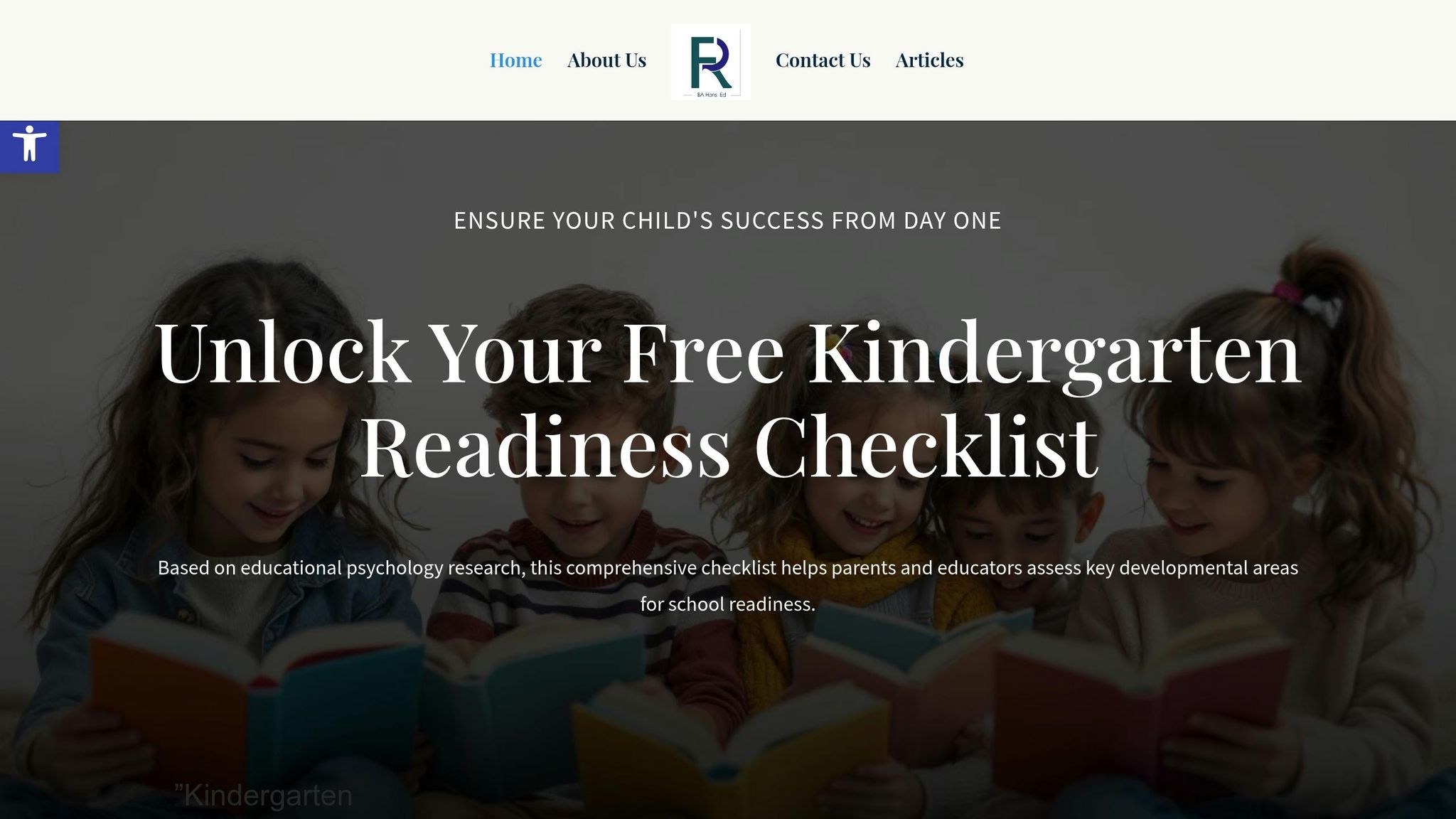
Fionadarocha offers valuable tools designed to help children develop conflict resolution skills. One standout resource is their readiness checklist, which evaluates key social-emotional abilities essential for resolving conflicts.
Here’s what the checklist focuses on:
| Skill Area | Focus | Application |
|---|---|---|
| Emotional Recognition | Expressing feelings appropriately | Daily interactions |
| Social Skills | Taking turns and sharing | Group activities |
| Communication | Using words to express needs | Conflict situations |
| Rule Following | Understanding boundaries | Classroom management |
"Fiona’s insights are invaluable. The checklist is comprehensive and easy to follow, making it a great resource for parents and teachers alike." – G. Brennen, Teacher
"A fantastic tool for parents! It helpfully aligns with what we teach in the classroom and helps bridge the gap between home and school." – David K., Teacher
These digital tools provide a solid foundation for hands-on learning, especially when paired with physical materials.
Basic Teaching Materials
To complement digital tools, physical materials like visual aids, timers, and comfort items can make learning more interactive and effective. Here’s how these materials can be used:
| Material Type | Purpose | Examples |
|---|---|---|
| Visual Aids | Emotion recognition | Feeling faces charts, mood meters |
| Timer Tools | Turn-taking practice | Sand timers, digital timers |
| Comfort Items | Self-regulation support | Squeeze balls, breathing buddies |
| Communication Props | Expression assistance | Talking sticks, sharing cards |
Setting Up a "Peace Corner":
Create a dedicated space where children can access these tools independently. A "peace corner" can include:
- Emotion charts for self-reflection
- Tools for self-regulation, like comfort items
- Visual reminders of conflict resolution strategies
- Accessible materials organized at child height
This setup encourages children to practice conflict resolution skills in a safe and supportive environment.
Practical Tips for Success:
- Rotate materials frequently to maintain interest.
- Keep resources within easy reach for children.
- Use clear, visual labels to help with organization.
- Consider creating duplicate sets to accommodate larger groups.
Conclusion: Building Better Social Skills
Teaching conflict resolution through a structured five-step method equips preschoolers with essential tools for both social and academic success. Starting early with these lessons lays a strong foundation for emotional and interpersonal growth that extends well beyond the classroom.
Research highlights that children entering kindergarten with these skills enjoy several key benefits:
| Skill Area | Long-term Benefits | Observable Outcomes |
|---|---|---|
| Classroom Adaptation | Smoother adjustment to routines | Improved ability to follow rules |
| Social Development | Enhanced peer relationships | Stronger connections with classmates |
| Academic Performance | Higher academic achievements | Noticeable improvement in schoolwork |
| Personal Growth | Boosted self-confidence | Greater self-assurance in interactions |
These gains come from consistent practice and reinforcement. Tools like emotion charts and peace corners help children understand and manage their feelings, while structured activities and visual aids make it easier for them to adopt positive conflict resolution habits.
"Fiona’s insights are invaluable. The checklist is comprehensive and easy to follow, making it a great resource for parents and teachers alike." – G. Brennen, Teacher [1]
Developing these skills is a step-by-step process, with each stage building on the last. By fostering environments where children feel safe to practice, educators and parents nurture emotional intelligence and effective communication – qualities that prepare preschoolers not just for kindergarten but for life.
For more gentle, ready-to-use strategies like these, my free Confident Beginnings Starter Kit offers a calm, whole-picture guide to preparing your child for school.
FAQs
How can I use ‘I feel’ statements to help my preschooler express their emotions during conflicts?
Using "I feel" statements is a straightforward way to help preschoolers express their emotions in a healthy and clear manner. Start by leading by example. For instance, you might say, "I feel frustrated when toys are left on the floor because it makes it hard to walk safely." This not only demonstrates how to articulate emotions but also connects those feelings to specific situations.
When your preschooler faces a conflict, guide them to use this structure: "I feel [emotion] when [situation] because [reason]." For example, they could say, "I feel sad when you take my toy because I was still playing with it." By encouraging this habit during disagreements, you’ll help them develop better communication and empathy skills over time.
How can I set up a ‘peace corner’ at home or in the classroom to help preschoolers resolve conflicts on their own?
Creating a "peace corner" can be an effective way to help preschoolers learn to handle conflicts on their own. Start by setting up a quiet, cozy area where kids can take a moment to calm down and think. Add soft seating like cushions or bean bags, along with comforting items such as stuffed animals or pillows. Include tools like a feelings chart or emotion cards to help kids recognize and talk about their emotions.
You might also include calming activities like sensory bottles, simple coloring books, or even a timer to guide them in self-regulation. Show them how to use the space by walking through steps for resolving conflicts – like taking turns to talk, listening carefully, and working together to find a solution. With practice, this "peace corner" can become a go-to spot for building communication skills and understanding others’ feelings.
How can progress charts and visual tools help preschoolers improve their conflict resolution skills?
Using Progress Charts and Visual Tools for Conflict Resolution
Progress charts and visual tools are a fantastic way to guide preschoolers in learning how to resolve conflicts. These tools offer a simple, hands-on method for kids to track their progress, making the process feel rewarding and encouraging. For instance, a sticker chart can be used to celebrate positive actions like sharing toys, speaking kindly, or taking turns during disagreements.
Visual aids also simplify the conflict resolution process by breaking it into easy-to-understand steps with pictures or symbols. This approach makes it easier for young children to grasp and remember what to do, helping them practice these skills consistently. Over time, these tools not only make the learning process fun but also boost kids’ confidence as they see their ability to handle conflicts improve.
Related posts
- School Readiness Guide: Key Skills for Kindergarten Success
- Common Questions About Preschool Social Development
- Solving Common Preschool Separation Anxiety Issues
- How to Teach Self-Awareness to Preschoolers

Meet Fiona da Rocha, a trailblazer in education with over two decades of expertise. At the heart of her mission to transform early education, Fiona empowers parents and teachers to ignite a passion for learning in children aged 3-9. Her approach? Joyful, child-led experiences that build confidence and foster talent exploration. Discover how she’s making learning a thrilling adventure at FionaDaRocha.com-where education meets empowerment and enthusiasm.