

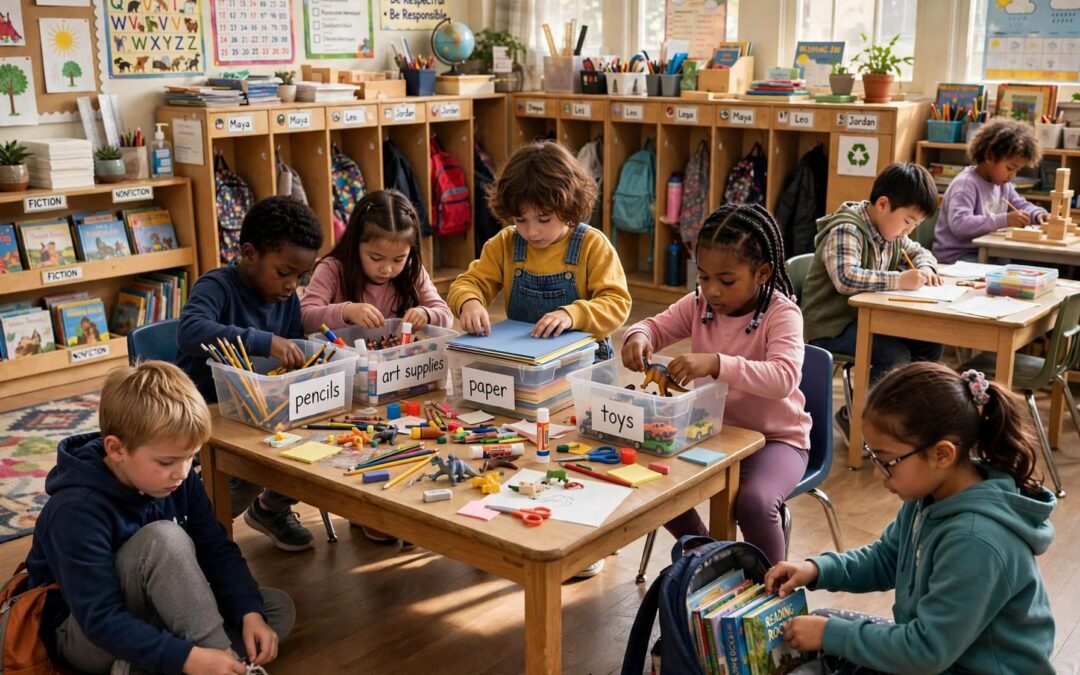
In this article, we explore the fascinating connection between a child’s sense of autonomy and their readiness for school. Discovering the influence that individual autonomy has on children’s ability to adapt and thrive in an educational setting is essential for parents and educators alike. Join us as we delve into the intricacies of this topic and uncover valuable insights that can help create a supportive and empowering environment for every child’s educational journey.
Factors that influence a child’s sense of autonomy
Parenting style
A child’s sense of autonomy is significantly influenced by their parents’ parenting style. Parents who adopt an authoritative parenting style, which combines warmth and support with appropriate boundaries and expectations, tend to foster a healthy sense of autonomy in their children. By balancing autonomy with guidance, these parents allow their children to make decisions within certain limits, helping them develop a sense of independence and self-confidence.
On the other hand, parents who are overly controlling or authoritarian may hinder their child’s sense of autonomy. By micromanaging every aspect of their child’s life and not allowing them to make decisions, these parents inadvertently limit their child’s independence and hinder their development of autonomy.
Opportunities for decision-making
Providing children with opportunities to make decisions is crucial for the development of autonomy. This can be done by allowing them to choose their own clothes, decide what activities they want to participate in, or have a say in family decisions. By involving children in decision-making processes, parents not only empower them to exercise autonomy but also help them develop critical thinking and decision-making skills.
Encouragement of independent thinking
Encouraging independent thinking plays a vital role in developing a child’s sense of autonomy. Parents who foster an environment where their children feel safe to express their thoughts, opinions, and ideas promote independent thinking. By listening to children’s perspectives and engaging in meaningful discussions, parents empower their children to think for themselves and develop their own beliefs and values.
Experiences with responsibility
Experiences with responsibility contribute to a child’s sense of autonomy. When children are given age-appropriate tasks and responsibilities, they gain a sense of ownership and agency. By completing these tasks, children learn the value of their contributions and develop a sense of competence and capability. Through this process, their sense of autonomy is further enhanced as they become more aware of their ability to take on responsibilities and make a difference.
The importance of autonomy in school readiness
Development of self-confidence
Autonomy plays a crucial role in the development of self-confidence in children. When children are given the freedom to make decisions and take control of their own actions, they experience a sense of accomplishment and build confidence in their abilities. This confidence translates into their readiness for school, as they believe in themselves and approach new challenges with a positive mindset.
Enhanced problem-solving skills
Autonomy fosters the development of problem-solving skills in children. When children are encouraged to think independently and find their own solutions, they become more adept at analyzing situations, thinking critically, and coming up with creative solutions. These problem-solving skills are essential for success in school, as children are often required to navigate through various academic and social challenges.
Improved decision-making abilities
By allowing children to make decisions and experience the consequences of those decisions, autonomy helps them develop better decision-making abilities. Children learn to weigh options, consider alternatives, and make choices based on their own judgment. This skill of decision-making is essential for school readiness as children are faced with numerous choices throughout their academic journey.
Resilience and adaptability
Autonomy contributes to the development of resilience and adaptability in children. When children are given the opportunity to face challenges independently and make their own decisions, they learn to adapt to new situations and overcome obstacles. This ability to bounce back from setbacks and embrace change is crucial for success in school, as children encounter new academic and social environments.
Impact of autonomy on academic readiness
Motivation and engagement
Autonomy significantly impacts a child’s motivation and engagement in their academic pursuits. When children have a sense of autonomy, they feel a greater sense of ownership and control over their learning. This intrinsic motivation leads to increased engagement in classroom activities, as children are actively interested and invested in their educational experiences.
Goal setting and achievement
Autonomy plays a vital role in helping children develop effective goal-setting skills. When children are empowered to set their own goals, they become more motivated and committed to achieving them. This sense of autonomy fosters a growth mindset, where children believe in their ability to improve and accomplish their goals. This mindset is essential for school readiness, as it propels children to strive for excellence and persevere in the face of challenges.
Time management and organization
Autonomy contributes to the development of effective time management and organizational skills. When children have the freedom to plan and prioritize their tasks, they learn to manage their time effectively. This skill not only ensures that children complete their academic responsibilities but also equips them with a valuable asset for successful school readiness.
Ability to work independently
By fostering a sense of autonomy, children develop the ability to work independently. They become confident in their capacity to complete tasks without constant supervision and guidance. This independence prepares them for the expectations of the school environment, where they are required to work on assignments and projects without constant oversight.
Emotional and social readiness
Assertiveness and communication skills
Autonomy plays an integral role in the development of assertiveness and communication skills in children. When children are encouraged to express their thoughts and opinions, they develop the ability to communicate effectively. This skill enables them to advocate for themselves, ask questions, and seek help when needed, contributing to their emotional and social readiness for school.
Social competence and peer relationships
Autonomy helps shape a child’s social competence and their ability to form positive peer relationships. When children have the freedom to engage in social interactions and make their own choices, they learn valuable social skills such as empathy, cooperation, and conflict resolution. These skills not only enhance their overall social competence but also improve their readiness for school, where social interactions are an integral part of the learning environment.
Handling conflicts and challenges
Autonomy contributes to children’s ability to handle conflicts and challenges effectively. When children are given the opportunity to make decisions and face the consequences of those decisions, they learn resilience and problem-solving skills. These skills enable them to navigate through conflicts, overcome challenges, and adapt to new situations, providing a strong foundation for their emotional and social readiness for school.
Emotional regulation and self-control
Autonomy helps children develop emotional regulation and self-control skills. When children have the freedom to make choices and experience the outcomes, they learn to manage their emotions and control their impulses. This ability to regulate emotions and exercise self-control is essential for navigating the social and emotional complexities of the school environment.
The role of autonomy in developing self-discipline
Responsibility and accountability
Autonomy plays a crucial role in developing a sense of responsibility and accountability in children. When children are given the freedom to make decisions, they also learn to take responsibility for the outcomes of those decisions. This sense of responsibility and accountability contributes to their self-discipline, as they understand the consequences of their actions and strive to make responsible choices.
Intrinsic motivation and self-regulation
Autonomy fosters intrinsic motivation and self-regulation in children. When children have the freedom to pursue their interests and make choices aligned with their passions, they develop a sense of internal motivation. This intrinsic motivation drives self-regulation, as children learn to manage their behaviors and actions based on their own values and goals.
Establishing routines and habits
Autonomy contributes to the development of routines and habits in children. When children have the freedom to plan their own schedules and make decisions about their daily routines, they learn the importance of structure and consistency. These routines and habits are essential for self-discipline, as they provide a framework for children to manage their time and responsibilities effectively.
Recognizing and learning from mistakes
Autonomy plays an important role in helping children recognize and learn from their mistakes. When children are given the freedom to make decisions and experience the consequences, they develop a deeper understanding of cause and effect. This understanding allows them to reflect on their actions, take ownership of their mistakes, and learn from them. This process of learning from mistakes enhances their self-discipline and contributes to their readiness for school.
The influence of autonomy on problem-solving abilities
Critical thinking and creativity
Autonomy significantly impacts a child’s critical thinking and creativity. When children are encouraged to think independently and find their own solutions to problems, they develop the ability to assess situations critically and come up with creative solutions. This skill set enhances their problem-solving abilities and prepares them for the complex challenges they may encounter in the school environment.
Exploration and experimentation
Autonomy promotes exploration and experimentation in children. When children are granted the freedom to explore different ideas, activities, and approaches, they develop a sense of curiosity and a willingness to take risks. This exploration and experimentation contribute to their problem-solving abilities, as they become more open to trying new strategies and embracing the process of trial and error.
Finding alternative solutions
By fostering a sense of autonomy, children develop the ability to find alternative solutions to problems. When children have the freedom to think independently and consider multiple perspectives, they become more adept at finding creative and innovative solutions to challenges. This skill of identifying alternative solutions is invaluable for success in the school environment, where children are often faced with a variety of academic and social problems.
Growth mindset and resilience
Autonomy fosters a growth mindset and resilience in children. When children are encouraged to view challenges as learning opportunities, they develop a mindset that embraces growth and improvement. This mindset enables them to approach problems with optimism and perseverance, enhancing their problem-solving abilities and contributing to their overall readiness for school.
Autonomy and self-confidence in decision-making
Building a sense of ownership
Autonomy plays a crucial role in building a child’s sense of ownership. When children are empowered to make decisions, they develop a sense of responsibility and ownership over their choices. This sense of ownership improves their self-confidence in decision-making, as they recognize the value and importance of their own judgment and contribute to their readiness for school.
Developing analytical thinking
Autonomy fosters the development of analytical thinking in children. When children have the freedom to make decisions and experience the consequences, they learn to think critically and assess their choices. This analytical thinking improves their decision-making abilities and enhances their self-confidence in making sound judgments.
Responsiveness to consequences
By experiencing the consequences of their decisions, children develop an understanding of cause and effect. This responsiveness to consequences enhances their self-confidence in decision-making, as they recognize the impact of their choices and learn to make more informed decisions in the future. This self-awareness and responsiveness to consequences contribute to their readiness for school, where they will encounter various choices and decisions.
Developing preferences and values
Autonomy allows children to develop their own preferences and values. When children have the freedom to make choices based on their own interests and beliefs, they develop a sense of identity and self-awareness. This development of preferences and values contributes to their self-confidence in decision-making, as they learn to align their choices with their own values and beliefs.
The impact of autonomy on motivation and engagement
Choice and control over learning
Autonomy significantly impacts a child’s motivation and engagement in their learning. When children have a sense of autonomy, they feel a greater sense of choice and control over their educational experiences. This freedom to choose their own learning activities and pursue their interests fosters intrinsic motivation and enhances their engagement in the learning process.
Intrinsic motivation and curiosity
Autonomy promotes intrinsic motivation and curiosity in children. When children have the freedom to explore their interests and make choices aligned with their passions, they experience a genuine desire to learn and discover. This intrinsic motivation and curiosity propel their engagement in the learning environment, as they are actively interested and invested in their educational experiences.
Sense of purpose and relevance
Autonomy contributes to the development of a sense of purpose and relevance in children’s learning. When children have the freedom to set their own goals and make choices that align with their interests and aspirations, they develop a sense of purpose in their education. This sense of purpose enhances their motivation and engagement, as they understand the relevance of their learning to their own goals and aspirations.
Active participation and enthusiasm
By fostering a sense of autonomy, children become active participants in their own learning. When children have the freedom to make choices and take ownership of their educational journey, they become more engaged and enthusiastic learners. This active participation and enthusiasm create a positive learning environment and contribute to their overall readiness for school.
The role of autonomy in fostering independence
Self-reliance and resourcefulness
Autonomy plays a vital role in fostering self-reliance and resourcefulness in children. When children have the freedom to make decisions and take control of their own actions, they develop a sense of independence. This independence promotes self-reliance and resourcefulness, as children learn to rely on their own abilities and find solutions to challenges on their own.
Initiative and self-motivation
Autonomy fosters initiative and self-motivation in children. When children have the freedom to pursue their interests and make choices aligned with their passions, they become self-motivated learners. This self-motivation drives their proactive approach to learning and encourages them to take initiative in their educational experiences.
Self-efficacy and belief in abilities
By experiencing autonomy, children develop a sense of self-efficacy and belief in their abilities. When children are empowered to make decisions and experience the positive outcomes of their actions, they gain confidence in their capabilities. This self-efficacy and belief in abilities contribute to their independence, as they recognize their own strengths and believe in their capacity to navigate through challenges and succeed.
Reduced reliance on external support
Fostering autonomy in children reduces their reliance on external support. When children are given the freedom to make decisions and take responsibility for their actions, they become less dependent on others for guidance and validation. This independence prepares them for the expectations of the school environment, where they are encouraged to take ownership of their learning and seek support when needed.
Conclusion
A child’s sense of autonomy has a significant impact on their readiness for school. Factors such as parenting style, opportunities for decision-making, encouragement of independent thinking, and experiences with responsibility influence a child’s sense of autonomy. Autonomy, in turn, plays a crucial role in various aspects of school readiness, including the development of self-confidence, enhanced problem-solving skills, improved decision-making abilities, resilience and adaptability, emotional and social readiness, self-discipline, problem-solving abilities, self-confidence in decision-making, motivation and engagement, independence, and overall readiness for school. By promoting autonomy in children, parents and educators can lay a strong foundation for their success and well-being in the school environment and beyond.

Meet Fiona da Rocha, a trailblazer in education with over two decades of expertise. At the heart of her mission to transform early education, Fiona empowers parents and teachers to ignite a passion for learning in children aged 3-9. Her approach? Joyful, child-led experiences that build confidence and foster talent exploration. Discover how she’s making learning a thrilling adventure at FionaDaRocha.com-where education meets empowerment and enthusiasm.