


Some moments with kids feel easy. A quiet bedtime story. A hand reaching for yours after a hard day. Other moments feel loaded, messy, or painful. If you have ever wondered why the same routine calms one child and sets off another, you are not alone. Attachment explains a lot of those patterns. It is the emotional connection that helps a child feel safe, seen, and loved. If early stress has shaped that connection, it can help to understand the impact of adverse childhood experiences on school readiness too.
Routine-based interventions for attachment repair use simple, repeatable activities to rebuild trust. Think of them as steady beats in a song. Morning snuggles, shared meals, calm-down rituals at night. For parents and educators, these small habits reduce friction and grow confidence on both sides. For children, they send a consistent message: I am safe with you.
This guide covers the basics of secure attachment, early signs a child needs support, and evidence-based routines that help. We will look at Parent-Child Interaction Therapy, Attachment-Based Family Therapy, and practical strategies you can use at home or in class. The aim is simple, caring, and doable. Choose one place to start, then let repetition do the healing.

Photo by Keira Burton
Did you know? About 35% of infants experience insecure attachment, which can lead to emotional and social challenges later in life. But there’s hope: routine-based interventions can help repair and strengthen parent-child bonds through consistent, predictable daily activities.
Key Takeaways:
- What are attachment disruptions? Breaks in the emotional connection between a child and caregiver, often caused by trauma, adversity, or inconsistent caregiving.
- Why routines matter: Predictable routines reduce anxiety, build trust, and support emotional regulation, helping children feel safe and secure.
- How routines help: Repetition and structure promote brain development, boost confidence, and improve social and emotional skills.
- Proven methods: Programs like ABC (Attachment and Biobehavioral Catch-Up) and Routines-Based Early Intervention (RBEI) use everyday activities to rebuild attachment.
Quick Tips for Parents:
- Start small: Focus on one or two routines like bedtime or mealtime.
- Be consistent: Stick to predictable schedules to build trust.
- Track progress: Watch for signs of improved emotional regulation and connection.
- Adapt as needed: Adjust routines to fit your child’s needs while maintaining structure.
Routine-based strategies are simple to implement and can make a big difference in creating a secure, loving environment for children. Ready to dive deeper? Let’s explore how these methods work and their real-world impact.
Top 5 recommendations for building BETTER routines. Attachment Specialist Adam Lane Smith
How Routine-Based Interventions Work
Routine-based interventions aim to mend disrupted connections by fostering consistent and nurturing interactions. These approaches draw from attachment theories to provide actionable strategies for rebuilding trust and security.
Repetition and Predictability in Attachment
Repetition and predictability are at the heart of repairing attachment through routines. Trust grows when children experience consistent, loving actions, comforting words, and reliable care. Research highlights that these steady, positive experiences are critical for building a sense of safety and security in children [1].
Dr. Erika Bocknek from Wayne State University emphasizes this connection:
“When children live in organized and predictable environments, they learn to self-regulate in organized and predictable ways, leading to optimal mental health over time.” [2]
For children struggling with attachment, routines provide a dependable framework that reduces anxiety and fosters confidence in their caregivers. Take a simple morning routine, for instance: knowing what to expect each day can help a child feel secure and reassured about their caregiver’s reliability. When caregivers consistently respond to an infant’s emotional needs, it sets the stage for the child to develop emotional responsiveness, creating a positive feedback loop that strengthens attachment [6].
Studies also show that children from high-risk families benefit significantly from consistent routines. They tend to perform better academically, interact more positively with peers and teachers, and display greater cooperation when their caregivers maintain predictable schedules [5].
Brain Benefits of Regular Activities
Routines don’t just build trust – they also play a crucial role in brain development. Secure attachments, supported by consistent routines, enhance cognitive growth, emotional regulation, language skills, social understanding, and problem-solving abilities [4]. These regular patterns of care help the brain form and strengthen neural connections, particularly in areas like the prefrontal cortex, which is key for emotional and social functioning.
Predictable and nurturing environments also trigger the release of neurochemicals like oxytocin and dopamine, which promote feelings of security and happiness. These early, dependable interactions shape neural pathways tied to empathy, emotional regulation, and social skills. Conversely, a lack of secure attachment can disrupt these critical processes. By boosting oxytocin and dopamine and activating mirror neurons, predictable routines help children develop emotional awareness and empathy [4].
Routines also benefit the body’s stress response system. Predictability reduces uncertainty and anxiety, enabling children to self-regulate more effectively – a cornerstone of mental well-being [2][3]. For example, a residential care facility in Texas that adopted routine-based care schedules reported noticeable improvements in children’s mood and behavior, illustrating the real-world impact of these interventions [7].
Lastly, consistent routines help balance key neurotransmitter systems – such as serotonin, dopamine, oxytocin, cortisol, and endorphins – which are essential for attachment and social bonding [4]. These chemical processes further underscore how routines can support both emotional and neurological health in children.
Research-Backed Intervention Models
Psychological research has introduced several structured intervention models aimed at mending parent-child relationships. These approaches use predictable routines to strengthen bonds and offer practical frameworks for parents and professionals to support attachment repair.
Attachment and Biobehavioral Catch-Up (ABC)

The ABC model is a short-term program tailored for caregivers of children up to 24 months old. Delivered over 10 weekly, hour-long home visits, it creates a comfortable setting for parents and children to work together [8].
What sets ABC apart is its focus on real-time coaching during everyday caregiving moments like feeding, diaper changes, and playtime. Parent coaches provide immediate feedback to help caregivers improve in three critical areas: offering nurturing responses when children are distressed, fostering synchronized interactions, and minimizing behaviors that might frighten the child [8].
A hallmark of the program is its “In the Moment” comments. These are real-time observations and suggestions that coaches share during interactions, aiming to deliver supportive feedback at least once per minute in half of the available opportunities [10]. This method helps parents better understand their child’s signals and respond with care and sensitivity.
Initially developed for families facing challenges such as neglect, abuse, or instability, ABC has since been adapted for foster families and those adopting internationally [9]. Like ABC, other models also highlight the importance of integrating attachment-focused strategies into daily routines.
Routines-Based Early Intervention (RBEI)
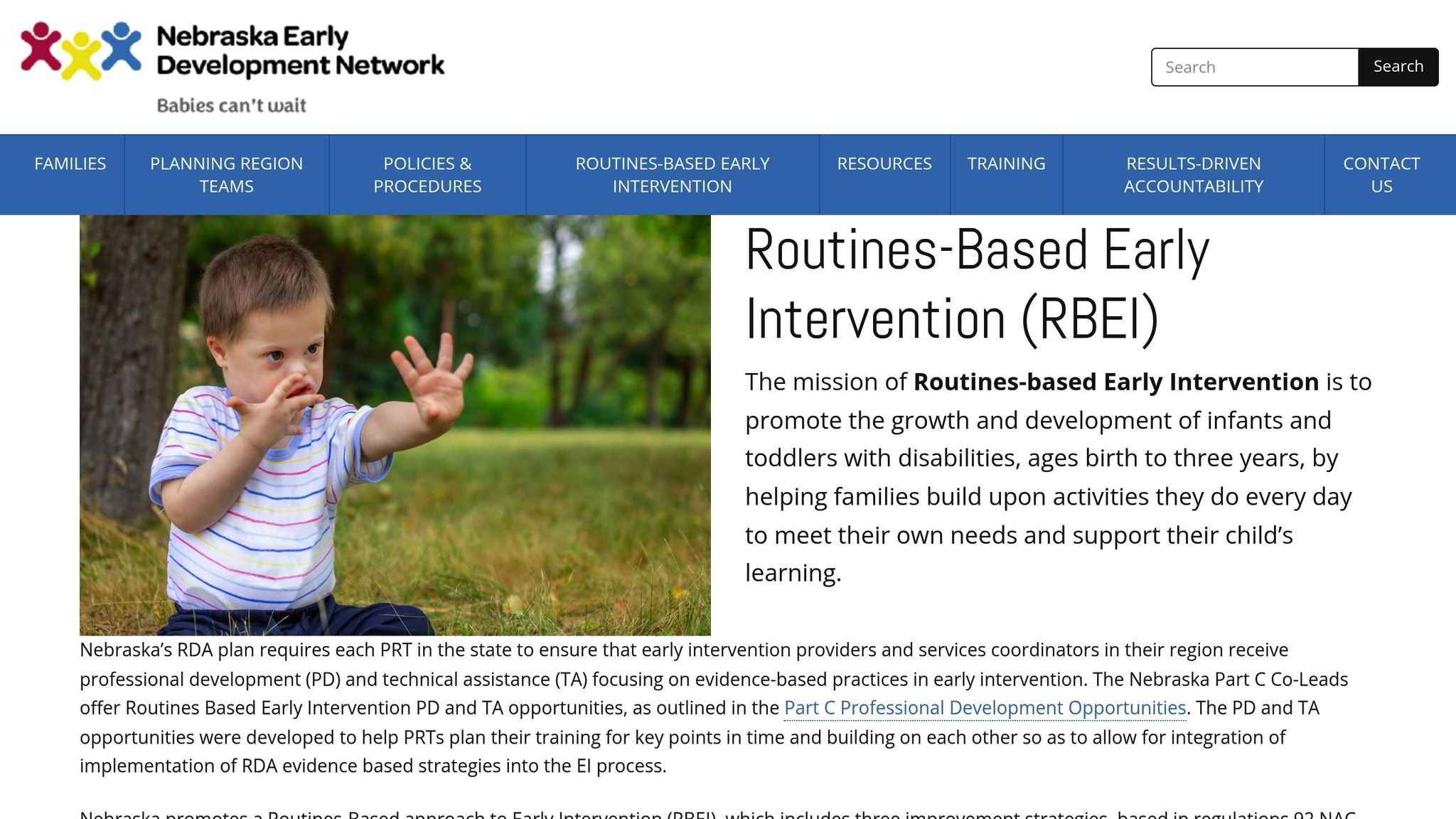
RBEI weaves developmental goals into a family’s natural daily activities, turning moments like mealtime, bath time, and bedtime into opportunities for connection and growth [11].
The process begins with a Routines-Based Interview (RBI), which helps practitioners assess the family’s unique daily patterns and identify areas for developmental focus. Families then set goals that fit seamlessly into their routines, minimizing disruption [11].
Unlike models that require frequent professional involvement, RBEI empowers families to take the lead. Research shows that too much professional intervention can sometimes hinder a family’s overall functioning [11]. Instead, RBEI equips families to support their child’s development in familiar, comfortable environments.
In California, roughly 80% of families using RBEI resources for social and emotional development report improved knowledge and effective application in daily life [12]. The model also guides parents in responding to their child’s emotions and teaching self-regulation during challenging moments [12]. Another approach, the Circle of Security®, further demonstrates how consistent routines can rebuild trust.
Circle of Security® Rituals

The Circle of Security model uses a visual “Circle of Security” map to help parents understand their child’s emotional and relational needs. It highlights the parent’s dual role as a secure base for exploration and a safe haven for comfort when the child feels distressed [14].
Rituals and predictable routines are central to this approach, offering children emotional stability through clear and consistent patterns [16]. Repair rituals, in particular, are emphasized as a way to rebuild trust after moments of conflict or disconnection. These rituals, when meaningful, strengthen the bond between parent and child [15].
The model recommends starting these practices in the home, where parents and children feel most at ease, before expanding them to other settings [13]. Bedtime routines are a key focus, with guidance on balancing consistency and flexibility. While children can have a say in planning their routines, parents maintain the structure needed to create a secure and predictable environment [13].
Practical Steps for Parents and Educators
Small, natural changes in daily routines can make a big difference when fostering attachment and emotional security.
Building Attachment-Focused Daily Schedules
Design routines that cater to your child’s individual needs. Instead of trying to revamp your entire day, begin with one or two key moments, such as bedtime or mealtime, and build from there [17].
Here are some ideas for structuring routines:
- Morning routines: Start the day at the same time with a simple greeting, then transition into tasks like brushing teeth and getting dressed.
- Evening routines: Create a calm wind-down period with activities like bath time, changing into pajamas, and reading a story together.
- Mealtime routines: Set meals around the same time each day. Begin with a small ritual, like washing hands or setting the table together, and involve your child in cleanup afterward [17].
Visual charts can help outline these steps, giving children a clear sense of what to expect and reducing any anxiety during transitions. If disruptions occur, adapt the routine and use visual or verbal cues to ease the adjustment [17]. Providing advance notice of changes can also help children prepare emotionally for the day ahead [18].
Using Fionadarocha Resources to Support Routines

Once you’ve established a structured daily routine, you can incorporate tools from Fionadarocha to support attachment-building activities. The platform offers resources like the Kindergarten Readiness Checklist and ready-made teaching materials to integrate learning into everyday moments [19][20].
The Kindergarten Readiness Checklist allows you to assess your child’s skills, pinpoint areas for improvement, and track their progress over time [19]. Meanwhile, the teaching materials save you time while aligning with attachment goals, letting you focus on connecting with your child during these moments [20].
Fionadarocha’s approach emphasizes making learning enjoyable, which helps children associate education with positive emotions and secure relationships. These tools are adaptable, allowing you to tailor them to your child’s specific developmental needs and challenges. With Fiona da Rocha’s expertise in early childhood education and educational psychology, the resources are grounded in research yet practical for everyday use [19][20].
Tracking Progress and Adjusting Routines
Pay attention to how your child responds to changes in their routines. Look for signs of progress, such as smoother transitions or reduced resistance during activities [21]. Notice small behavioral shifts, like seeking comfort during difficult moments, as these can indicate stronger emotional bonds.
It’s natural for routines to have hiccups. When trust is disrupted, focus on repairing the connection through comforting and sensitive interactions. These moments of “rupture and repair” are essential for building resilience and trust [21].
Set specific, measurable goals to track progress. For example, observe whether your child is more willing to engage in routine tasks or shows improved emotional regulation over time [22]. Encourage emotional awareness by helping them name and validate their feelings during predictable moments [22].
If certain parts of the routine consistently cause distress, consider adjusting them rather than forcing compliance. Techniques like previewing upcoming activities, offering countdowns, or using visual aids can make transitions smoother [22].
Ultimately, focus on whether your child feels safe, understood, and secure during these activities. These are the core elements of attachment-focused routines. By observing your child’s cues and making thoughtful adjustments, you can maintain a balance between structure and responsiveness, ensuring emotional growth and connection [23].
Conclusion: Building Stronger Attachment Through Routines
Routine-based approaches can play a powerful role in repairing attachment challenges by creating consistent, comforting interactions between children and their caregivers [24]. When children repeatedly experience these structured moments, they learn to see their caregivers as sources of comfort and as secure foundations for exploration and growth [24].
Research shows that over 80% of preschool children with behavioral difficulties are insecurely attached to their parents [25]. Interventions that combine strategies for building relationships with behavior management techniques have proven effective, emphasizing the strong link between attachment and behavior.
These interventions rely on parental sensitivity and responsiveness. Studies highlight that focusing on maternal sensitivity not only improves caregiver responsiveness but also strengthens children’s sense of attachment security [25].
The best part? This approach is simple to start. You don’t need advanced training to weave attachment-focused routines into daily life. Small, thoughtful changes in everyday routines can significantly enhance the bond between parent and child. Consistent, sensitive responses create an environment where trust and emotional regulation naturally thrive [3].
Key Takeaways for Parents and Educators
Routine-based interventions don’t just address attachment disruptions – they also set the stage for lasting relational security. Applying these principles can transform everyday routines into meaningful opportunities for connection.
One of the most important lessons from attachment research is to prioritize the child’s perspective [23]. Shifting your focus in this way allows routines to become moments of connection and emotional safety, even during behavioral challenges.
Start by creating a predictable structure for daily activities. Research from the 1990s revealed that children from high-risk families showed better cognitive and social outcomes when caregivers provided consistent routines [5]. This doesn’t mean sticking to rigid schedules – it’s about establishing reliable patterns that help children feel secure and build trust in their world.
Use routine moments to validate emotions and show empathy. These everyday interactions are perfect opportunities to acknowledge feelings, offer comfort, and affirm the importance of a child’s emotional experiences.
Remember, building a strong relationship is just as important as managing behavior. The most effective interventions combine both elements, especially for children facing severe behavioral challenges or strained relationships with their caregivers [25].
While structure is essential, flexibility is equally important. Successful routine-based interventions adapt to the unique needs of each family [26]. Balancing consistency with responsiveness ensures that children feel both secure and valued. Allow room for your child’s input and celebrate small victories along the way. This balance fosters trust and reinforces the connection between caregiver and child.
Finally, keep in mind that repairing attachment takes time. The goal isn’t to achieve perfect routines or flawless behavior – it’s about creating repeated experiences of safety, understanding, and connection. Over time, these moments help children view their caregivers as reliable sources of support, forming the foundation for healthier relationships throughout their lives. Grounded in models like ABC, RBEI, and Circle of Security®, these strategies show that consistency in routines is a cornerstone of long-term parent-child connection.
If you would like a calm, step-by-step companion for the bigger picture, my free Confident Beginnings Starter Kit gathers these gentle routines into one parent-friendly guide.
FAQs
How can parents use routines to strengthen attachment in a busy household?
Parents can help build stronger bonds with their children by weaving consistent and meaningful routines into everyday life – even in the busiest of households. Simple, predictable routines that align with your family’s schedule and your child’s developmental stage can bring a sense of stability and comfort. Think of things like regular mealtimes, bedtime rituals, or dedicated playtime. These small moments create a foundation of trust and security.
To make these routines more impactful, get your child involved. Explain what’s coming next and encourage them to take part. For instance, reading a bedtime story together or letting them help with meal prep are small gestures that can make a big difference. These shared experiences not only strengthen trust but also create opportunities for connection. By keeping routines consistent and filled with positive interactions, children feel valued and more connected – even when life gets hectic.
How can I tell if routine-based interventions are helping my child build a stronger attachment?
When routine-based interventions are effectively helping to mend attachment in your child, you might observe some encouraging shifts. For instance, your child may show better emotional regulation, with fewer tantrums or emotional outbursts. You could also notice improved social interactions, such as more cooperative play or increased engagement with peers.
Another promising sign is growing trust in caregivers – your child might feel more at ease seeking comfort or reassurance when needed. Additionally, you might see a greater curiosity to explore their surroundings, less anxiety during separations, and more frequent displays of positive attachment behaviors, like hugging or seeking closeness. These changes suggest that the interventions are helping build a secure and nurturing connection between you and your child.
What routines or activities can help strengthen the bond between parents and children?
Creating steady routines and enjoying meaningful activities together can significantly strengthen the bond between parents and children. Everyday habits, like sharing meals, reading a bedtime story, or dedicating time to family activities, offer kids a sense of security and connection. These simple moments go a long way in fostering trust and emotional closeness.
Engaging in interactive activities – think arts and crafts, outdoor adventures, or cooperative games – can boost communication and deepen relationships. On top of that, maintaining open communication and providing emotional support during these routines creates a safe environment where children feel comfortable expressing themselves and developing emotionally.
Related posts
- Solving Common Preschool Separation Anxiety Issues
- Parent-Teacher Collaboration for Behavior Support
- How to Use Positive Reinforcement in Early Education

Meet Fiona da Rocha, a trailblazer in education with over two decades of expertise. At the heart of her mission to transform early education, Fiona empowers parents and teachers to ignite a passion for learning in children aged 3-9. Her approach? Joyful, child-led experiences that build confidence and foster talent exploration. Discover how she’s making learning a thrilling adventure at FionaDaRocha.com-where education meets empowerment and enthusiasm.